
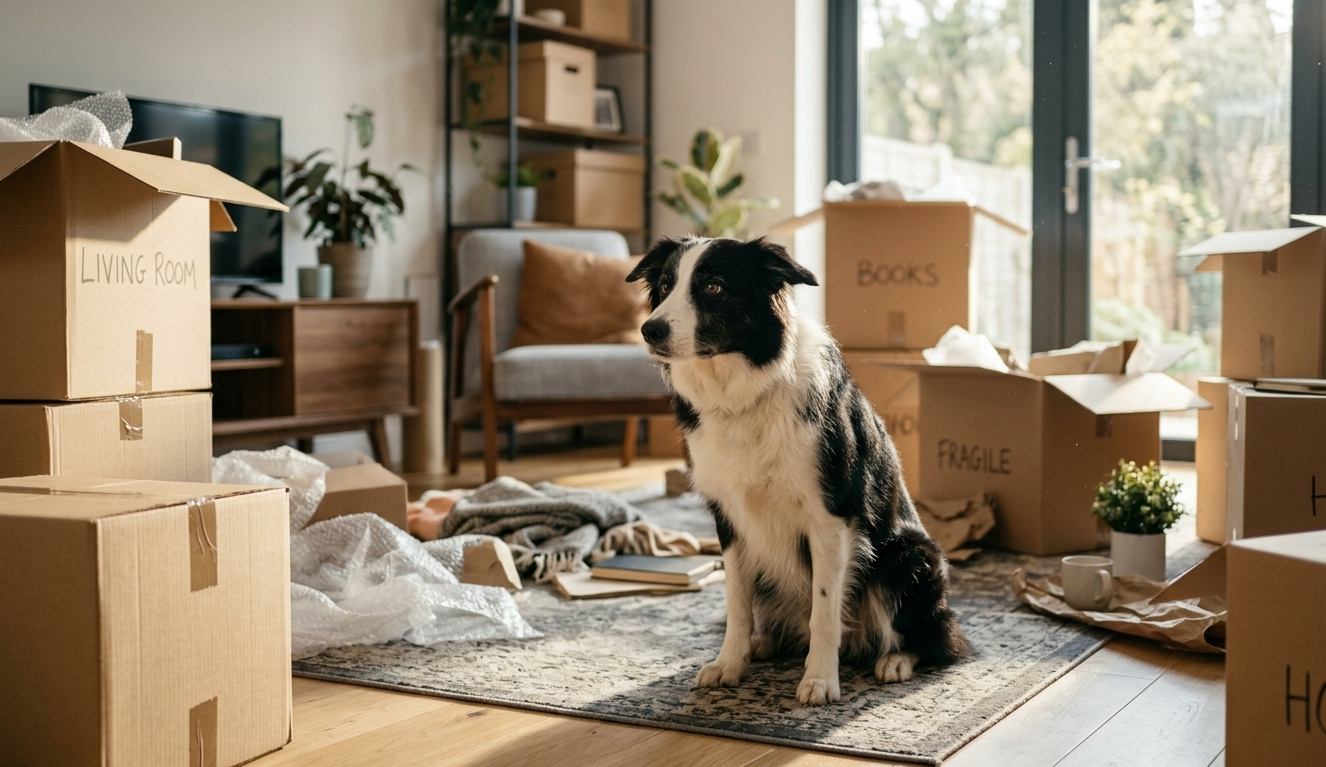
Moving into a brand-new house is undoubtedly one of the most exciting yet intensely chaotic milestones a human household can experience. As you focus heavily on managing moving logistics, signing endless paperwork, and packing up endless boxes, it is surprisingly easy to overlook how this transition affects your pet. While humans fundamentally understand the long-term benefits of a relocation, our domestic animals simply wake up one morning to find their entire familiar world completely erased.
Navigating severe dog anxiety after moving to a new home requires a deep, compassionate understanding of how environmental changes disrupt a canine’s psychological security. When a dog is suddenly stripped of their established territory, familiar outdoor scents, and predictable daily pathways, their nervous system instinctively enters a heightened state of survival panic. This thorough guide outlines the core psychological reasons behind relocation distress and delivers clear, actionable strategies to help your dog decompress seamlessly into their new sanctuary.
Step 1: Recognizing the Silent Warnings of Relocation Stress
Before you can effectively treat moving stress in dogs, you must learn to identify how relocation panic manifests across their daily behavior. Many pet parents expect their dog to show immediate, dramatic signs of fear like loud whining or running away from empty rooms. However, the vast majority of animals communicate their deep displacement anxiety through quiet physiological cues that are incredibly easy to overlook amid the chaos of unpacking.
Deciphering Sudden Behavioral Shifts
A highly common mistake during a household move is misinterpreting severe internal stress as sudden behavioral regression or general disobedience. For example, a perfectly house-trained dog might suddenly begin leaving puddles near packing paper, or a calm dog may start shadow-tracking your footsteps relentlessly. These uncharacteristic actions are almost never acts of defiance; rather, they are direct indicators that your pet’s emotional wellness is actively failing to process the new environment. To gain a deeper structural understanding of these subtle bodily warnings, cross-reference your pet’s current actions with our comprehensive guide on signs of anxiety in dogs immediately.
Distinguishing Dayone Confusion From Chronic Anxiety
It is entirely normal for a companion animal to experience mild, temporary confusion during their first forty-eight hours inside an unfamiliar architectural layout. However, if your pet consistently refuses to sleep, exhibits localized hypervigilance, or paces around the perimeter of the hallways for several consecutive days, their condition requires targeted intervention. When these displacement anxieties are left to fester without proactive environmental grounding, they regularly spill over into long-term behavioral disorders. If your pet’s frantic energy routinely peaks after dark, discover the step-by-step methods required to establish a tranquil evening baseline by learning why your dog is pacing at night right now.
Step 2: Setting Up a Temporary Safe Zone Prior to Unpacking
The immense chaos of carrying heavy wooden furniture, ripping open packing tape, and rearranging rooms can quickly push a nervous animal into a full-blown panic attack. To mitigate this intense sensory overload, your absolute first priority upon arriving at the new property must be building a localized sensory-muted sanctuary. Isolating your dog from the primary moving commotion gives their nervous system a safe space to process unfamiliar auditory stimuli safely.
The CalmPawLab New House Decompression Checklist
-
Set up an isolated room (bathroom or bedroom) away from moving paths.
-
Unpack unwashed bedding and familiar toys to preserve scent profiles.
-
Play continuous low-frequency white noise to mask echoing sounds.
-
Deploy a plug-in maternal pheromone diffuser near their resting zone.
Preserving Critical Familiar Scent Profiles
When a dog enters a brand-new house, they are immediately hit with a wall of alien scents like fresh paint, new carpet chemicals, or odors left behind by previous residents. You can counteract this sensory assault by deliberately unpacking your dog’s unwashed bedding, favorite blankets, and old plush toys before changing anything else. Surrounding your pet with their own established biological scent profile signals to their primitive brain that this new territory is safe.
Step 3: Rebuilding Confidence Through a Structural Canine Routine
Dogs are deeply comfort-driven creatures of habit that gain immense emotional stability from knowing exactly what is going to happen next throughout their day. When you undergo a major household relocation, their micro-schedules are typically shattered, leaving them feeling completely unanchored in space and time. Systematically restoring a rigid daily routine is one of the fastest natural remedies for dog anxiety available to modern owners.
Locking in Feeding and Walk Schedules
Even if your living room is completely filled with unpacked boxes, you must strictly preserve your dog’s historic feeding and walking timestamps. If your pet is used to eating breakfast at exactly seven in the morning and walking at sunset, maintain those exact parameters without variation. Providing this level of absolute temporal predictability gives your anxious dog a reliable anchor, teaching them that while the walls around them have changed, their vital resources remain completely secure.
Leveraging Low-Arousal Brain Enrichment Games
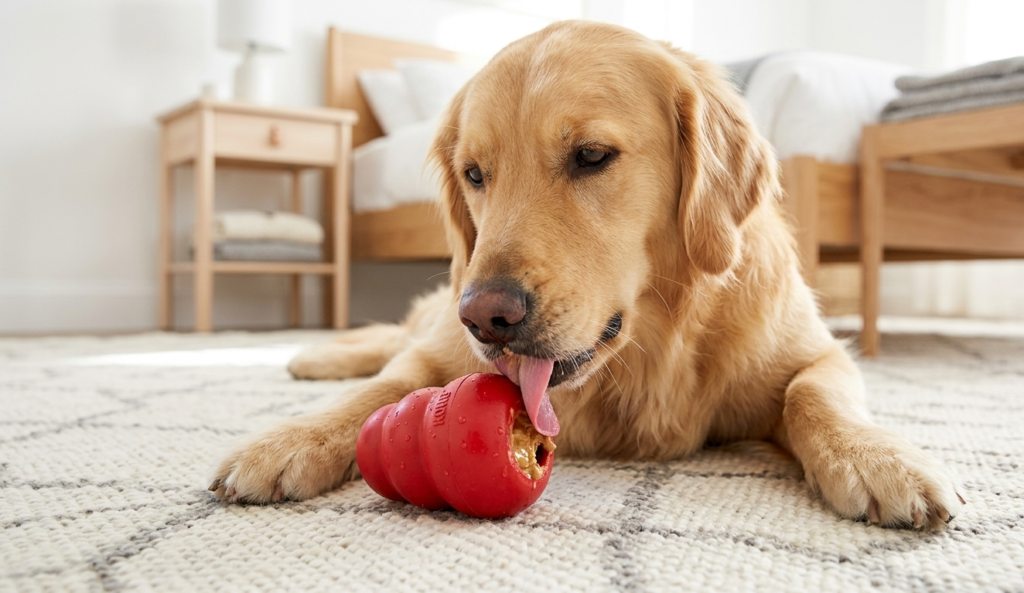
An under-stimulated, displaced dog will frequently channel their excess nervous energy into destructive chewing on baseboards or defensive barking at unfamiliar neighborhood noises. Rather than forcing your dog into high-stress physical exercise, focus your initial energy on independent, calming mental tasks like snuffle mats and frozen lick mats. For a complete master plan on leveraging evolutionary forage behaviors to soothe a panicking pet without medication, read our ultimate blueprint on how to calm an anxious dog naturally today.
Top Amazon Affiliate Gear to Smooth the Home Transition
Providing your dog with the right physical tools during their first week in a new house can drastically accelerate their emotional recovery. These targeted solutions are specifically engineered to encourage self-soothing behaviors and create artificial boundaries while you organize your new home.
Anxiety Relief Gear Comparison
| Product Style | Top Active Benefits | Best Applied For | Check on Amazon |
|---|---|---|---|
|
Orthopedic Calming Bed
|
Raised rims create a physical sense of security and warmth to support calming a restless dog. | Nighttime Pacing & Nesting | View Price ➔ |
|
Anxiety Pressure Wrap
|
Delivers gentle, continuous torso pressure to safely calm the overactive canine nervous system. | Thunderstorms & Fireworks | View Price ➔ |
|
Pheromone Diffuser
|
Emits synthetic maternal pheromones to signal absolute environmental safety on a subconscious level. | New Home & Crate Training | View Price ➔ |
Step 4: Gradual Home Exploration and Boundary Mapping
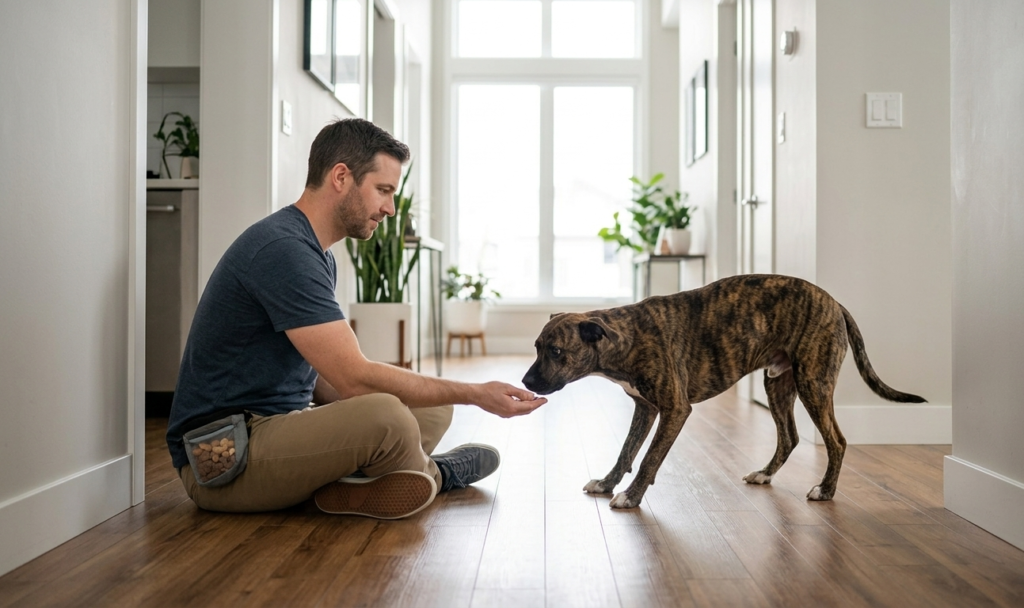
Once your dog is resting calmly inside their initial safe zone, you can begin the systematic process of introducing them to the rest of the household layout. Allowing an anxious animal to explore an entire large house all at once can easily re-trigger intense feelings of territorial vulnerability. Slow, highly rewarded room-by-room boundary mapping ensures your pet builds positive associations with every single square foot of their new environment.
Utilizing Positive Reinforcement Territorial Mapping
Keep all interior doors closed initially, allowing your dog access to only one or two rooms during their first few days under your direct supervision. Walk through these limited spaces alongside your pet, calmly dropping ultra-high-value treats like freeze-dried liver or fresh chicken onto the floor as they sniff the perimeters. This simple exercise quickly rewires their primitive brain logic: exploring this unfamiliar floor layout consistently results in incredible rewards.
FAQ
Q: How long does it typically take for a dog to completely adjust to a new home?
A: The average decompression timeline for domestic dogs ranges anywhere from three weeks to three full months, a period commonly referred to by behavioral experts as the 3-3-3 rule. During the first three days, your dog may feel completely overwhelmed and detached from their surroundings. By week three, they generally begin testing boundaries and settling into their structural routine, but achieving absolute emotional security inside the new territory typically requires up to ninety days of consistent lifestyle tracking.
Q: Why is my house-trained dog suddenly having bathroom accidents inside the new house?
A: Sudden indoor elimination after a household move is almost always caused by intense territorial confusion rather than a loss of house-training skills. To a primitive canine brain, the scent of fresh paint, clean building materials, or previous pet pheromones makes the indoor floors look like an unmapped outdoor zone. Additionally, elevated anxiety levels naturally speed up a dog’s gastrointestinal tract, causing them to lose physical bladder control much faster during moments of acute environmental panic.
Q: Should I let my anxious dog explore the new backyard alone right away?
A: No, you should absolutely avoid leaving an anxious or disoriented dog unsupervised in a brand-new backyard during their initial transition phase. Extreme relocation panic can drive even highly obedient animals to dig beneath fences, scale high gates, or bolt out of open side doors in an instinctual attempt to locate their old territory. Walk your dog around the new yard perimeter on a secure leash first, allowing them to sniff all boundaries calmly while you check the structural integrity of the fencing.
Q: Can a sudden household relocation trigger severe separation anxiety in an adult dog?
A: Yes, experiencing a chaotic household relocation can absolutely act as a major traumatic catalyst that triggers acute separation distress in previously independent adult animals. Because their geographical environment has changed completely, your physical presence becomes the only remaining source of safety they recognize in the universe. Practice leaving your dog alone for tiny, incremental intervals of just a few minutes inside their safe room early on to rebuild their independent self-soothing skills naturally.
Final Thoughts
Helping your canine companion overcome severe dog anxiety after moving to a new home is a deeply rewarding patience-driven journey that ultimately strengthens your lifelong bond. Remember that your dog is not trying to make your moving process difficult; they are simply drowning in an overwhelming sea of unfamiliar sensory input and lost security baselines. By proactively designing an inviolable scent sanctuary, locking down a rigid daily routine, and using reward-based territorial mapping, you give them the structure they need to thrive. Step back, unpack your home slowly, celebrate the microscopic milestones of behavioral adjustment, and enjoy watching your pet slowly transform their new house into a true, stress-free home.