
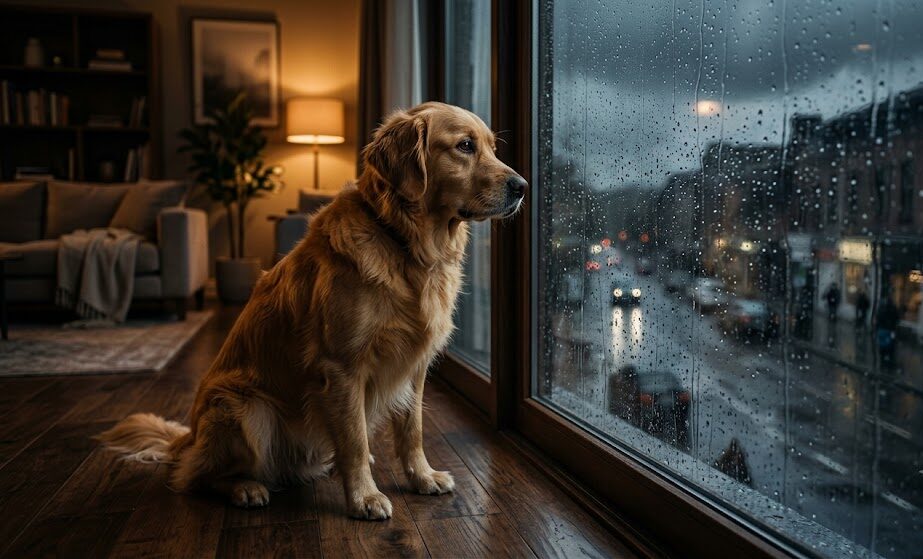
Watching your dog fall into a state of absolute panic every time you prepare to leave the house is heartbreaking. This condition is far more than simple boredom or spiteful behavior; it is a genuine panic attack triggered by your absence. You need practical, compassionate strategies to help your canine companion feel secure when they are left alone.
Understanding the deep-seated root causes of separation anxiety in dogs allows you to implement lasting behavioral changes. By recognizing their distress early, you can systematically rebuild your dog’s confidence and protect your home environment from destructive behaviors. This guide offers expert insight into why this happens and provides natural, actionable solutions.
Decoding the Problem: Recognizing the Real Signs of Distress
Many owners confuse attention-seeking misbehavior with severe emotional panic, which leads to ineffective training approaches. True separation distress manifests the moment you cross the threshold, and sometimes even hours before you walk out the door. You must learn to read these physiological warning signals correctly.
Common Signs of Separation Anxiety
When a dog experiences isolation panic, they often express their terror through destructive chewing, persistent howling, or indoor elimination. You might notice your dog frantically scratching at exit doorways or windows in a desperate attempt to follow you. To evaluate if these escalating habits match a broader pattern of distress, analyze the core signs of anxiety in dogs right away.
The Evolution of Hyper-Attachment Behavioral Habits
Some dogs develop a shadow-like attachment style, tracking your every movement from room to room during the day. This lack of independence directly feeds their inability to cope when physical boundaries are finally enforced at departure time. If your dog cannot rest peacefully in a separate room, look into why is my dog suddenly so clingy to re-establish balanced boundaries.
Practical Dog Separation Anxiety Solutions to Restore Peace
Overcoming severe isolation distress requires a structured desensitization plan that slowly alters your dog’s emotional response to your departures. You want to teach them that your absence is temporary and entirely safe. Consistency across all household members is vital for this training to succeed.
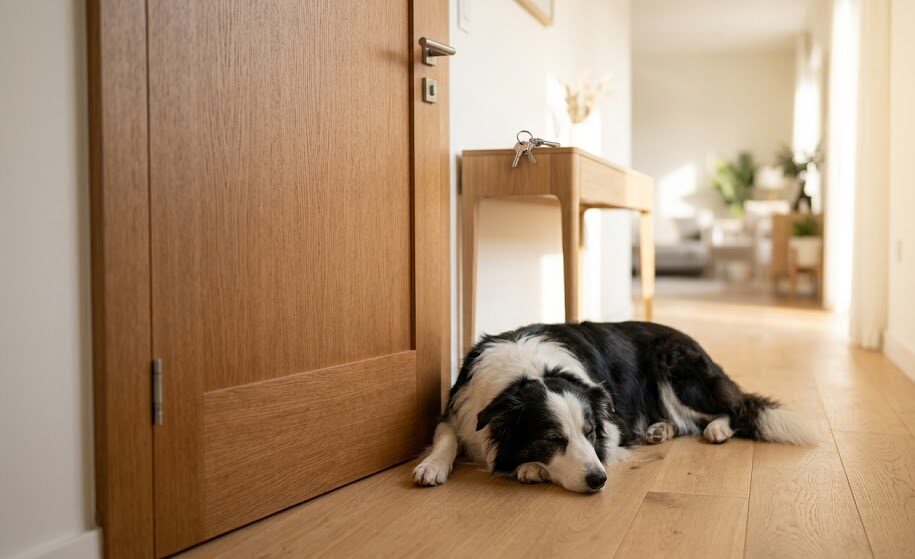
Deconstructing Your Departure Triggers
Dogs are master observers who quickly memorize your pre-departure routines, such as putting on shoes or grabbing car keys. These actions cause their stress levels to spike long before you actually leave the house. Break this predictive cycle by performing these actions randomly throughout the day without actually leaving, neutralizing their panic value.
Crate Training for Separation Anxiety Safely
A crate can act as a secure sanctuary, but it must be introduced slowly so it never feels like an isolated prison. Pair the crate with high-value rewards, feeding your pet their meals inside it to build positive spatial associations. For a detailed guide on handling dogs that struggle to settle during stressful environmental shifts, discover how to handle dog anxiety after moving to a new home seamlessly.
Top Amazon Affiliate Tools to Comfort an Anxious Dog
Utilizing target comforting gear can drastically reduce your dog’s physiological arousal when they are home alone. These tools work best when paired with your active desensitization training program. They provide passive sensory relief to help soothe a hypervigilant nervous system.
Separation Anxiety Calming Tools
| Product Category | Primary Behavioral Benefit | Best Strategic Usage | Check on Amazon |
|---|---|---|---|
| Calming Pheromone Diffuser | Emits synthetic maternal pheromones to signal subconscious safety. | Plugged near primary exit door | View Price ➔ |
| Durable Foraging Toy | Distracts the brain with food during the crucial first 20 minutes. | Given 5 minutes before leaving | View Price ➔ |
| Anxiety Compression Wrap | Applies gentle, continuous torso pressure to reduce panic shivering. | Short solo training sessions | View Price ➔ |
Utilizing Low-Arousal Brain Games for Treating Canine Separation Distress
An anxious brain left with nothing to do will naturally focus entirely on your absence. Shifting your dog’s attention toward independent foraging challenges exhausts their mental reserves while steadily boosting their confidence. This mental fatigue naturally translates into longer periods of restful sleep while you are gone.
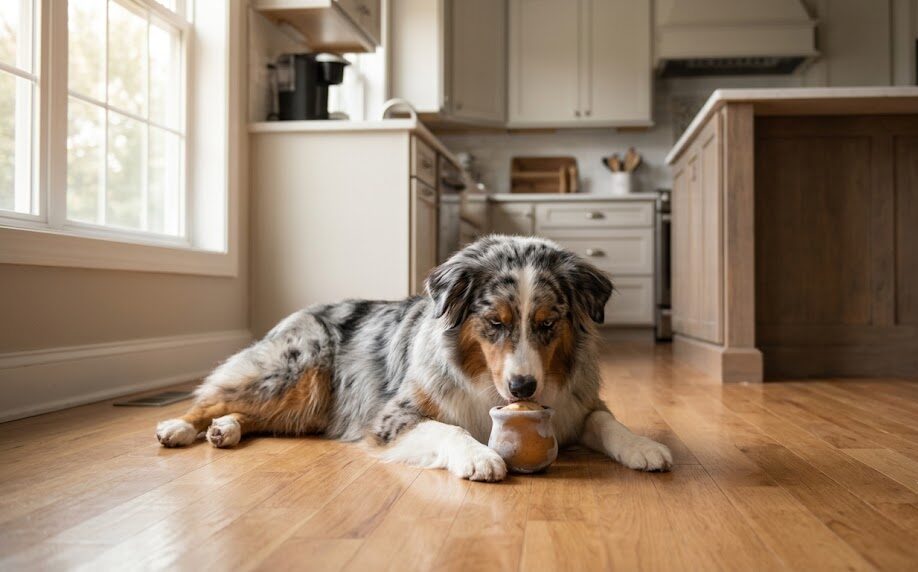
The Soothing Power of Repetitive Foraging
The physical act of licking and chewing triggers an automatic release of serotonin, which directly lowers a dog’s heart rate. Instead of standard food bowls, offer your pet frozen lick mats covered in peanut butter inside their designated safe zone. To explore more organic, non-medicated decompression techniques for your pet, read our blueprint on how to calm an anxious dog naturally today.
FAQ
Q: How long does it take to cure separation anxiety in dogs?
A: There is no universal timeline for resolving separation distress, as recovery depends on the severity of the anxiety and your training consistency. Minor cases may see significant improvement within a few weeks of diligent desensitization work. Severe, long-standing panic loops might require several months of structured training, environmental management, and professional veterinary guidance.
Q: Should I get a second pet to help with my dog’s isolation panic?
A: Getting another pet rarely resolves true separation distress because the dog’s anxiety is explicitly tied to your presence, not a general lack of company. A second animal can sometimes create additional household stress or pick up the anxious behaviors themselves. Focus your energy on building your current dog’s independent coping mechanisms before considering expanding your pet family.
Q: Why does my newly adopted rescue dog panic when left alone?
A: Shelter survivors often carry a heavy emotional burden from past abandonment or multiple family transitions, making them highly vulnerable to isolation panic. They require a patient, highly predictable routine to learn that your departures are not permanent desertions. To support a traumatized animal through this transition phase, read our guide on how to help a nervous rescue dog feel safe properly.
Final Thoughts
Overcoming severe isolation distress requires moving away from frustration and stepping into patient, empathetic behavior modification. Your dog is not destroying your home out of anger; they are simply trapped in an overwhelming survival crisis when left alone. By neutralizing your departure triggers, offering engaging foraging toys, and building a secure sanctuary, you can heal their fear. Stay calm, celebrate minor steps of progress, and look forward to a peaceful, confident companion.