
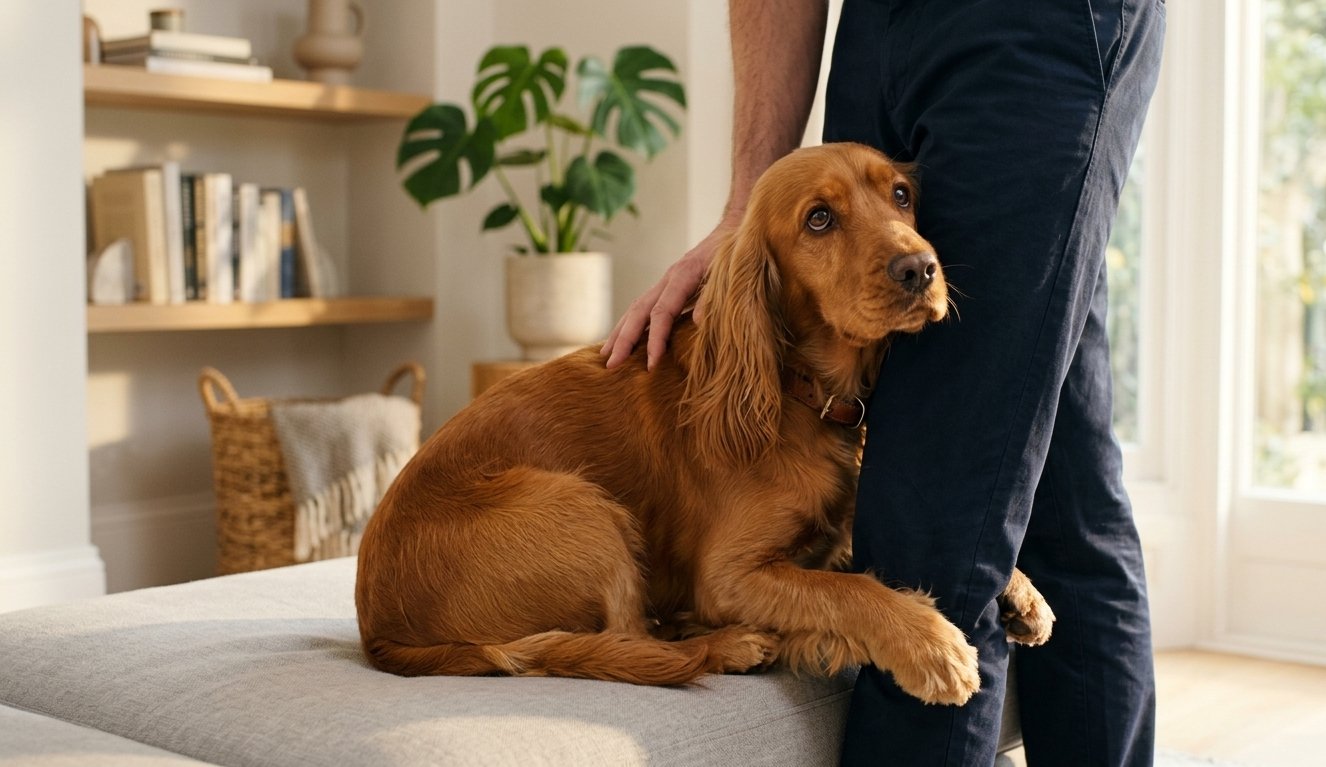
Few things in life match the profound joy of building a deep, affectionate bond with your loyal canine companion. However, when a normally independent animal transitions into an absolute shadow overnight, that heartwarming affection can quickly feel overwhelming. If your dog suddenly refuses to stay in a separate room or blocks your path to the doorway, you are likely looking for immediate answers.
A sudden onset of extreme shadow behavior is almost always a direct physical manifestation of underlying psychological or physiological changes. Dogs rely heavily on predictable environmental baselines, and when those baselines shift, they naturally look to their handlers for basic survival reassurance. This comprehensive guide will help you decode the precise biological and emotional triggers driving this behavior, while offering clear, natural solutions to restore your peace of mind.
Step 1: Differentiating Velcro Traits from Sudden Behavioral Shifts
Before deploying a long-term behavioral plan, you must establish whether your dog’s current behavior is an extension of their natural personality or an acute reaction. Many popular working and herding breeds are genetically hardwired to maintain constant visual and physical proximity to their human handlers throughout the day. However, a sudden, dramatic spike in attention-seeking habits in a previously relaxed animal points to a completely different set of structural triggers.
The Evolution of Healthy Canine Attachment
Domesticated dogs are evolutionary pack animals that inherently view safety as a collective, group-oriented dynamic. It is entirely natural for your pet to follow you into the kitchen or look to you for direction when a stranger enters the home. This baseline attachment is a healthy indicator of deep trust and cooperative social bonding between you and your pet.
When “Clingy” Transitions into Emotional Distress
When a dog’s dependency escalates to the point of structural panic, it frequently signals that their internal security baseline has been severely compromised. If your pet begins trembling, whining continuously at closed doors, or displaying intense hypervigilance alongside their shadow behavior, they are likely struggling with a deeper emotional issue. To evaluate these escalating bodily warning signs accurately against a professional diagnostic framework, review the vital signs of anxiety in dogs right now.
Step 2: 5 Hidden Reasons Why Your Dog Is Suddenly So Clingy
A sudden behavioral shift rarely happens without an underlying environmental, psychological, or medical catalyst. By carefully assessing recent changes in your household and observing your dog’s physical habits, you can accurately uncover the specific trigger behind their intense dependency.
1. Underlying Medical Discomfort or Hidden Pain
When a dog experiences physical pain or illness, their primitive survival instincts drive them to seek out protection from the pack leader. Because dogs cannot verbally communicate physical discomfort, they often express physical vulnerability by gluing themselves directly to your side. A sudden onset of intense clinginess should always prompt a thorough check for hidden medical issues before you assume the problem is entirely psychological.
2. Household Upheaval and Environmental Changes
Dogs are profound creatures of habit that gain immense emotional stability from a static, highly predictable domestic environment. Major life changes like welcoming a new infant, hosting visitors, changing your work schedule, or moving properties can easily shatter your pet’s sense of security. If your household has recently undergone a major relocation, discover how to rebuild your pet’s environmental confidence by managing dog anxiety after moving to a new home effectively.
3. Incipient Separation Anxiety and Confidence Failures
Sudden clinginess can occasionally serve as an early warning sign of escalating separation distress. If your dog begins tracking your pre-departure cues—such as grabbing keys, putting on coats, or closing laptops—they are anticipating the panic of isolation. To learn how to systematically restructure your daily routines and soothe these intense fight-or-flight panic responses before they worsen, apply the expert techniques in how to calm an anxious dog naturally today.
4. Age-Related Cognitive Decline in Senior Dogs
As companion animals enter their senior years, they often experience a gradual decline in their cognitive, visual, and auditory faculties. This loss of sensory input can leave an older dog feeling profoundly disoriented and vulnerable, causing them to cling to you as a living anchor. If your senior dog’s daytime dependency regularly transforms into frantic walking or heavy breathing when the house goes dark, it is vital to research why your dog is pacing at night to prevent chronic stress.
5. Unseen Noise Sensitivities and Thunderstorm Phobias
Canine hearing is vastly superior to human auditory processing, allowing dogs to pick up low-frequency vibrations long before humans notice them. Distant construction work, barometric pressure drops, or upcoming holiday fireworks can keep an emotionally sensitive dog in a state of constant fear. In these instances, your dog clings to you because they view your physical presence as their only safe haven against an invisible threat.
Step 3: Implementing a Custom Boundary Checklist for Your Home
To help your hyper-attached companion feel secure when they are a few feet away from you, you must establish clear, rewarding physical boundaries. The goal is not to isolate your pet, but rather to teach them that independent resting is a peaceful, highly profitable activity.
The CalmPawLab Independent Boundary Checklist
-
Position an orthopedic calming bed in a quiet, low-traffic corner of your room.
-
Deploy interactive safety gates to prevent physical tracking and bathroom shadowing.
-
Practice brief, structured out-of-sight intervals continuously throughout the day.
-
Reward calm, independent relaxation exclusively with high-value foraging puzzle toys.
Mastering the Art of Selective Desensitization
Practice moving around your living space without acknowledging your dog’s every movement. If you stand up to grab a glass of water and your dog leaps up to follow you, remain calm, neutral, and avoid offering immediate eye contact or physical affection. By removing the immediate reward of attention, you break the subconscious feedback loop that keeps your pet stuck in velcro mode.
Step 4: Top Amazon Affiliate Tools to Manage Extreme Clinginess
Providing your companion with the right physical outlets allows them to focus their mental energy on productive tasks rather than tracking your footsteps. The following curated solutions are exceptional for encouraging self-soothing behavior and building healthy, long-term autonomy.
Anxiety Relief Gear Comparison
| Product Style | Top Active Benefits | Best Applied For | Check on Amazon |
|---|---|---|---|
| Orthopedic Calming Bed | Raised rims create a physical sense of security and warmth to support calming a restless dog. | Nighttime Pacing & Nesting | View Price ➔ |
| Anxiety Pressure Wrap | Delivers gentle, continuous torso pressure to safely calm the overactive canine nervous system. | Thunderstorms & Fireworks | View Price ➔ |
| Pheromone Diffuser | Emits synthetic maternal pheromones to signal absolute environmental safety on a subconscious level. | New Home & Crate Training | View Price ➔ |
Step 5: Utilizing Mental Enrichment to Foster Autonomy
A significant portion of sudden clingy behavior stems directly from daily mental boredom and a lack of constructive physical outlets. When an intelligent animal has nothing to do, your movements through the household become the most exciting event in their world. Shifting their focus toward independent foraging tasks naturally exhausts their brain, stimulating the release of calming, mood-stabilizing endorphins.
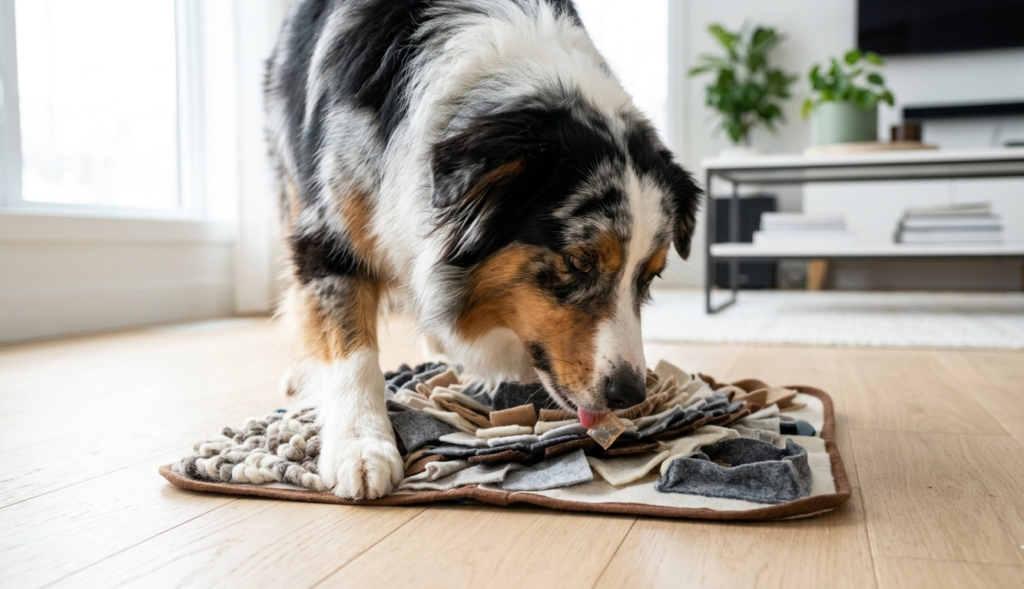
Harnessing the Power of Licking and Chewing
The physical mechanics of licking and chewing are biologically hardwired coping mechanisms that naturally lower a canine’s heart rate during moments of stress. Transition to delivering your dog’s daily meals inside frozen foraging toys, snuffle mats, or textured lick mats rather than a standard bowl. This simple lifestyle adjustment forces your pet to work independently for their food, building critical cognitive resilience while you manage your daily household tasks.
FAQ
Q: Why is my dog suddenly following me to the bathroom every single time?
A: From an instinctual standpoint, your dog views your household as a shared, cooperative territory requiring constant mutual awareness and pack safety. Additionally, when you enter a small space like a bathroom, you are stationary and distraction-free, making it the perfect location for an attention-seeking dog to secure physical proximity. Finally, dogs lack a human concept of personal privacy and simply view your movement as an invitation for a group transition.
Q: Should I completely ignore my dog when they display intense velcro behavior?
A: Completely ignoring an intensely anxious animal can occasionally backfire, causing their baseline internal stress to spike as they struggle harder to catch your eye. Instead of deploying cold avoidance, proactively redirect your pet to a highly rewarding alternative activity, such as their designated place mat or a durable chew toy. This constructive approach teaches them exactly what behavior you want to see, rather than leaving them emotionally ungrounded and confused.
Q: Can a sudden medical issue cause my senior dog to become incredibly clingy?
A: Yes, sudden medical conditions, hidden joint discomfort, or age-related vision and hearing loss can absolutely cause an older dog to cling to their owner for physical protection. When an animal’s sensory perception begins to cloud, they look to their trusted handler as a literal guide to navigate the physical layout of the home safely. Always schedule a comprehensive veterinary checkup if a mature dog exhibits an abrupt behavioral shift to ensure they receive proper medical care.
Final Thoughts
Successfully managing a sudden spike in clingy behavior is never about diminishing your unique bond or withholding genuine physical affection from your pet. Rather, true canine behavior education focused on empowering your companion with the emotional strength required to feel completely safe when you are out of sight. By consistently utilizing clear physical boundaries, daily brain games, and addressing underlying environmental or medical triggers, you transform anxious dependency into calm, relaxed devotion. Be exceptionally consistent with your daily boundary training, remain endlessly patient through minor setbacks, and celebrate the beautiful reward of a truly confident, independent dog.