

There are few things more frustrating than being jolted awake by the sudden, sharp sound of your dog barking in the middle of the night. Sleep deprivation creates tension between you and your pet, often leading to increased stress during the daylight hours as well. You need to understand the root cause before you can restore peace to your household.
Learning why dogs bark at night and how to stop it involves analyzing your pet’s physical needs, emotional state, and environmental triggers. Dogs rarely bark without a valid reason, whether they are reacting to external noises or signaling internal distress. This guide will help you decode these midnight vocalizations and implement permanent solutions for a quieter home.
Uncovering the Root Causes of Nocturnal Vocalization
Before you attempt any form of discipline or training, you must identify what is triggering the behavior. An anxious dog behaves very differently from a bored or territorial one, and the intervention must match the problem. If your dog is barking, pacing, and panting, you should review our guide on dog panting and pacing at night explained to see if anxiety is the culprit.
Addressing Separation Anxiety and Social Isolation
Many dogs bark because they feel lonely or abandoned when the rest of the household goes to sleep. This is particularly common in puppies or rescue dogs that have not yet developed a sense of security in their new home. If your dog also exhibits extreme attachment behavior during the day, you should check our guide on why is my dog suddenly so clingy to address the underlying dependency.
Environmental Triggers and Territorial Instincts
Canines are naturally vigilant, and their hearing is vastly superior to ours, allowing them to detect distant noises we cannot hear. A passing car, a rustling animal outside, or a neighbor’s door closing can trigger an instinctual alarm bark. If these noises cause your dog to tremble or hide, they may have a broader phobia, which you can learn to manage by understanding the signs of anxiety in dogs.
Proven Methods to Stop Nighttime Barking
Stopping the behavior requires a combination of behavioral training, environmental management, and meeting your dog’s physical needs. You want to discourage attention-seeking barking while providing reassurance for anxiety-based vocalizations. Consistency is the most important factor in your training strategy.
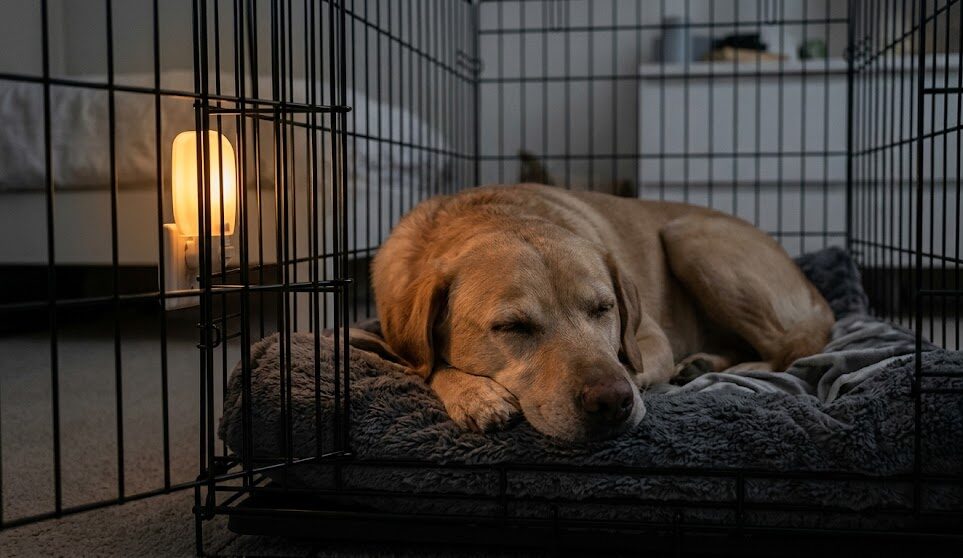
Implementing Effective Crate Training
A secure crate can serve as a safe, quiet den that limits the dog’s access to the rest of the house and reduces environmental stimulation. When used correctly, the crate becomes a calming sanctuary rather than a confinement space. Ensure the crate is sized appropriately and associated with positive experiences, such as gentle treats or calm verbal praise, before bedtime.
Managing Attention-Seeking Behavior
If your dog barks solely to get you to wake up, play, or give them attention, you must resist the urge to respond. Any interaction—even negative reinforcement like scolding—can be interpreted by the dog as successful “attention” gained. Instead, ignore the barking entirely, allowing the dog to learn that nighttime vocalizations do not produce a rewarding outcome.
Essential Tools to Facilitate Quiet Nights
Providing your dog with the right environmental aids can minimize the likelihood of them staying awake and barking out of boredom or sensory overwhelm. These solutions are designed to soothe the nervous system and mask external triggers.
Nighttime Barking Control Gear
| Product Category | Primary Behavioral Benefit | Best Strategic Usage | Check on Amazon |
|---|---|---|---|
| White Noise Machine | Effectively masks sudden outdoor noises and neighbor movements. | Near sleeping area | View Price ➔ |
| Calming Puzzle Toys | Provides mental enrichment to exhaust cognitive energy before bed. | Right before lights out | View Price ➔ |
| Orthopedic Dog Bed | Reduces physical discomfort and improves deep sleep quality. | Quiet, draft-free corner | View Price ➔ |
Fostering Evening Calm Through Mental Enrichment
Often, dogs bark at night simply because they are not tired enough to sleep soundly. Shifting their focus toward structured foraging tasks in the evening exhausts their brain, stimulating the release of calming, mood-stabilizing endorphins. A mentally tired dog is almost always a quiet, sleeping dog.
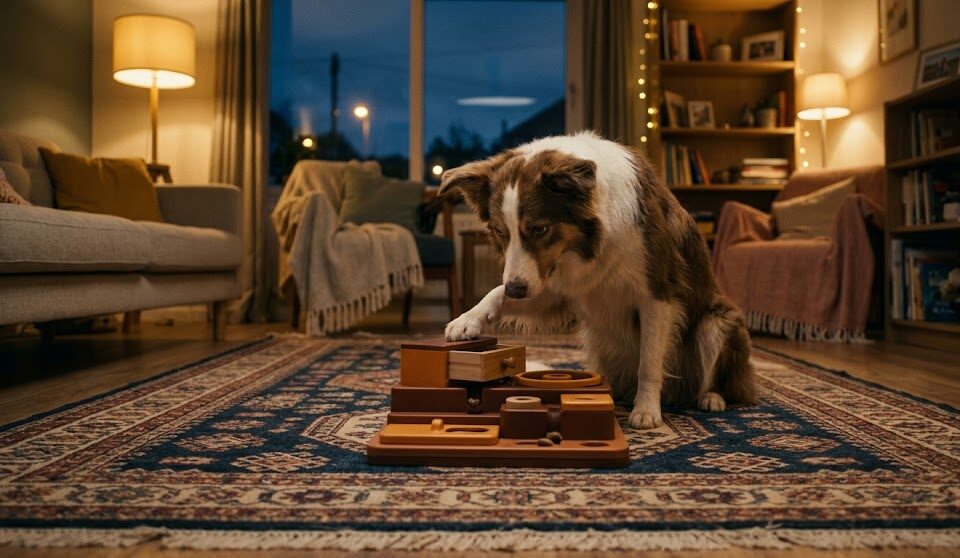
Harnessing the Power of Physical and Mental Decompression
Engaging your dog in a low-intensity scent or licking task before bed triggers natural relaxation. Provide your companion with a frozen rubber foraging toy or a textured lick mat to encourage steady, repetitive calming behaviors. For a complete master plan on utilizing these organic, non-medicated decompression techniques, apply the methods outlined in how to calm an anxious dog naturally today.
FAQ
Q: Is it normal for my puppy to bark at night?
A: Yes, it is very common for puppies to bark at night as they adjust to their new environment and establish a new sleep schedule. They are often lonely, need to go outside for potty breaks, or are simply overwhelmed by the quiet. Consistency in training and a secure sleeping area will help them settle down as they mature.
Q: Should I let my dog “cry it out” if they are barking at night?
A: You should only use the “cry it out” method if you are absolutely certain the dog does not need a potty break and is not experiencing genuine medical distress or panic. If the barking is purely for attention, ignoring it is the best approach to ensure the behavior stops. However, if the dog is in obvious distress, you should always address their needs with calm, neutral interaction.
Q: When should I be worried about my dog’s nocturnal barking?
A: You should be concerned if the barking is a sudden, new behavior that persists despite your training efforts or if it is accompanied by other symptoms like trembling, pacing, or excessive panting. These changes may indicate an underlying medical issue or a worsening anxiety condition that requires professional veterinary evaluation. Always trust your instincts if your dog’s behavior changes dramatically.
Final Thoughts
Addressing why dogs bark at night and how to stop it is a process that requires patience, consistency, and a deep understanding of your dog’s unique needs. You are building a foundation of security that helps your pet feel safe and comfortable in the dark. By addressing anxiety, providing mental enrichment, and maintaining a firm sleep routine, you can reclaim your sleep and restore household harmony. Remain calm and consistent, and your dog will eventually learn that nighttime is for resting, not for alerting.