
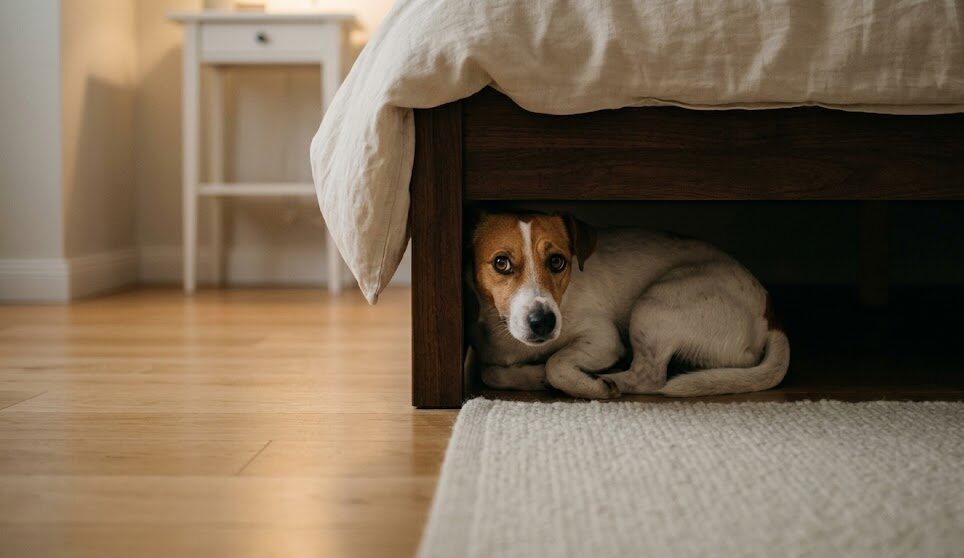
Finding your beloved canine companion trembling in a dark corner or under a bed is deeply unsettling. This acute combination of physical shaking and self-isolation signals that your pet’s emotional baseline has been completely overwhelmed. You need immediate, practical answers to restore their peace of mind safely.
A sudden onset of this behavior is rarely a random occurrence without a specific biological catalyst. Dogs use these intense physical cues to communicate a profound survival crisis that they cannot vocalize. This educational guide will explain the underlying triggers and provide natural, actionable recovery strategies.
Decoding the Problem: Fear Responses vs. Physical Pain
To help a vulnerable animal, you must first determine if their behavior stems from emotional trauma or physiological distress. Canines instinctively hide when their internal coping mechanisms fail, masking vulnerability from potential predators. Recognizing the difference between a psychological panic attack and physical agony is essential for proper treatment.
The Evolutionary Drive Behind Hiding Behavior
In the wild, an injured or terrified animal is a primary target for apex predators. Consequently, domestic dogs inherit a primitive survival instinct to retreat into dark, enclosed dens when feeling deeply compromised. This defensive self-isolation provides them with a temporary sense of structural security against perceived environmental threats.
Identifying Secondary Stress Signals
Physical trembling is often accompanied by an array of subtle bodily changes that reveal your pet’s internal state. You might notice heavy salivation, widened pupils, pinned-back ears, or a tightly tucked tail layout. To accurately evaluate these escalating warning signs against a professional framework, review the core signs of anxiety in dogs today.
5 Primary Triggers Behind Sudden Canine Shaking and Hiding
A sudden behavioral shift always points to an acute environmental change or an underlying internal medical catalyst. By tracking exactly when the trembling started, you can pinpoint the specific trigger causing your companion’s distress.
1. Acute Environmental Noise Pollution
Sudden, high-frequency sounds like fireworks, backfiring engines, or construction equipment can easily push a sensitive dog into a state of absolute terror. If these explosive auditory disruptions are accompanied by dropping barometric pressures, your pet may require specialized storm care. To address weather-related panic patterns effectively, read our comprehensive guide on dog anxiety during thunderstorms immediately.
2. Hidden Medical Discomfort or Systemic Pain
Physical pain is one of the most frequently overlooked reasons for sudden trembling and self-isolation habits. Internal joint inflammation, sudden muscular spasms, or toxic ingestions cause an intense adrenaline surge that manifests as physical shivering. If your pet’s daytime distress regularly evolves into frantic nighttime walking loops, explore why your dog is pacing at night to prevent chronic exhaustion.
3. Severe Spatial Disorientation from Relocation
Moving your family into an unfamiliar property can completely shatter a vulnerable dog’s established sense of domestic security. The strange floor layout, foreign neighborhood smells, and echoing hallway acoustics can leave them feeling profoundly exposed. If your pet is currently struggling to adjust to a new living space, apply the expert tips for managing dog anxiety after moving to a new home right away.

4. Decompression Failures in Newly Adopted Rescue Dogs
Shelter survivors often arrive at their adoptive homes carrying a massive accumulation of chronic psychological stress. If their initial introduction to the household is too chaotic, their nervous system may experience a complete emotional shutdown. To learn how to systematically introduce a traumatized animal without triggering intense survival panic, consult our blueprint on how to help a nervous rescue dog feel safe seamlessly.
5. Escalating Separation Distress and Hyper-Attachment
Occasionally, a dog will begin shaking and hiding as an anticipatory reaction to your upcoming departure from the house. They track your morning routines—like grabbing keys or putting on shoes—and realize they are about to be left alone. If your pet’s panic shifts into intense, shadow-like tracking before you leave, discover how to establish healthy boundaries by analyzing why is my dog suddenly so clingy today.
Immediate Solutions to Comfort and Decompress a Scared Dog
When your companion is actively panicking, your immediate reactions can either soothe their nervous system or accidentally escalate their terror. You must approach them with a structured, low-key methodology that eliminates social pressure.
The CalmPawLab Canine Crisis Decompression Checklist
-
Avoid forcing the dog out of their chosen hiding spot by their collar.
-
Lower your body posture, sit on the floor, and avert direct eye contact.
-
Activate a continuous white noise machine to mask outside triggers.
-
Deliver low-arousal mental enrichment once the shivering subsides.
The Importance of Respecting Chosen Sanctuaries
Never pull a trembling animal out from under a bed or inside a closet unless they are in immediate physical danger. Forcing physical contact when a dog is over threshold can easily trigger defensive aggression as a last resort. Allow them to remain in their self-selected sanctuary while you quietly work to minimize surrounding sensory stimulation.
Top Amazon Affiliate Tools to Manage Chronic Trembling
Providing your pet with the right soothing equipment can significantly accelerate their neurological recovery during a panic attack. These targeted products are exceptional for delivering physical comfort and a sense of deep security.
Trembling & Hiding Calming Gear
| Product Category | Primary Behavioral Benefit | Best Strategic Placement | Check on Amazon |
|---|---|---|---|
| Anxiety Compression Vest | Delivers gentle, hugging torso pressure to soothe an overactive nervous system. | When trembling starts | View Price ➔ |
| Orthopedic Crate Cave | Provides a darkened, fabric-covered nesting space that mimics a secure wild den. | Quiet room corner | View Price ➔ |
| Calming Pheromone Kit | Releases synthetic maternal pheromones to signal safety on a subconscious level. | Wall near hiding spot | View Price ➔ |
Utilizing Low-Arousal Brain Games to Dissolve Fear
An under-stimulated, anxious brain will constantly cycle through loops of hypervigilance and environmental worry. Shifting your companion’s focus toward independent foraging tasks naturally exhausts their mental energy while stabilizing their mood. These tasks stimulate the production of serotonin, counteracting the rush of adrenaline caused by fear.

Harnessing the Neurological Power of Repetitive Licking
The physical act of licking triggers an immediate, involuntary drop in a canine’s heart rate and blood pressure. Instead of feeding meals in standard bowls, transition to using frozen foraging toys or textured lick mats inside their safe space. To discover how to successfully integrate these organic, non-medicated decompression methods into your daily routine, apply the steps in how to calm an anxious dog naturally today.
FAQ
Q: Why is my dog suddenly shaking and hiding even though the house is completely quiet?
A: Canine hearing and scent detection are vastly superior to human sensory processing, meaning your dog can perceive triggers you cannot notice. They may be reacting to low-frequency construction vibrations miles away, a neighborhood animal outside, or an impending drop in barometric pressure. If this unprovoked trembling regularly transforms into heavy, breathless panting after the sun goes down, read our complete guide on dog panting and pacing at night explained for tailored answers.
Q: Could an abrupt onset of shaking and hiding indicate that my dog is in physical pain?
A: Yes, sudden trembling paired with frantic self-isolation is a primary clinical indicator of acute internal pain or illness in domestic dogs. Conditions such as abdominal discomfort, spinal disc issues, or sudden joint injuries can easily cause a dog to shiver and hide. If you cannot identify an obvious environmental trigger like thunder or fireworks, schedule a comprehensive veterinary exam to rule out medical causes.
Q: Should I offer treats to my dog while they are actively shaking and hiding in the corner?
A: Yes, offering high-value treats to a terrified animal is an excellent way to implement positive counter-conditioning. Giving food will not reinforce their fear; instead, it helps rewrite their emotional association with the scary trigger. However, if your dog is completely over threshold, their digestive system may shut down, causing them to refuse even the highest-value rewards until they calm down.
Final Thoughts
Successfully managing severe trembling and hiding behavior requires a shift from human expectations to empathetic canine education. Your dog is not acting stubborn or dramatic; they are simply navigating a genuine survival crisis within their nervous system. By protecting their chosen hiding spots, implementing a white noise routine, and eliminating underlying medical pain, you can restore their confidence. Stay exceptionally consistent with your daily boundary training, remain a calm anchor for your pet, and enjoy the reward of a relaxed companion.